[PLEASE SCROLL DOWN TO SEE THE STORY OF GUNPOWERDER PARK ENFIELD]
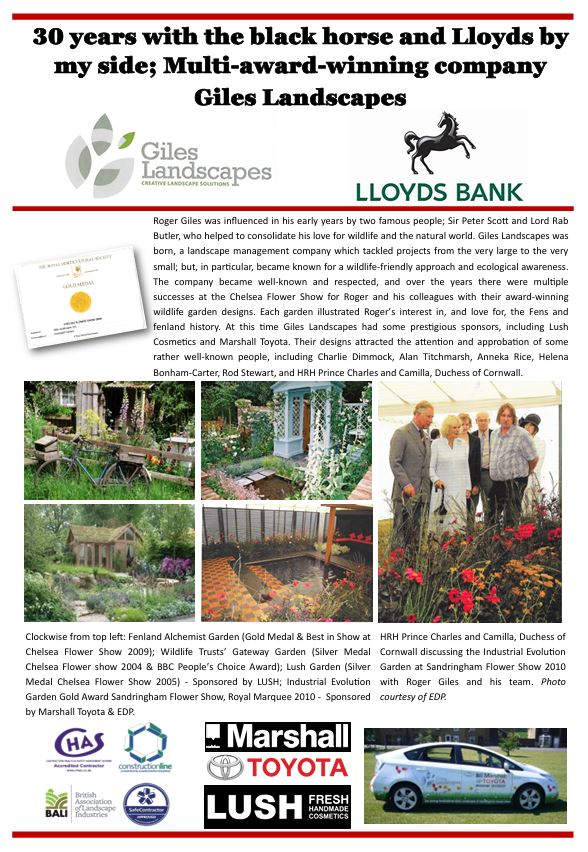
For a start RHS Chelsea flower show
[ i am only bragging to counter Lloyds BSU practising gaslighting on me please click on abbreviations Chris Packham ADHD / Asperger’s }
[ THE world’s greatest flower show]
2009 gold best in show also 1
.
of our gardens attracted first place BBC peoples vote in award at the show
THE QUALITY OF OUR STAFF UNDERPINED BY THE TENASITY & SKILES OF MY WIFE SUE HELPED US FIGHT BACK FROM THE CRASH AT END OF THE 80,S
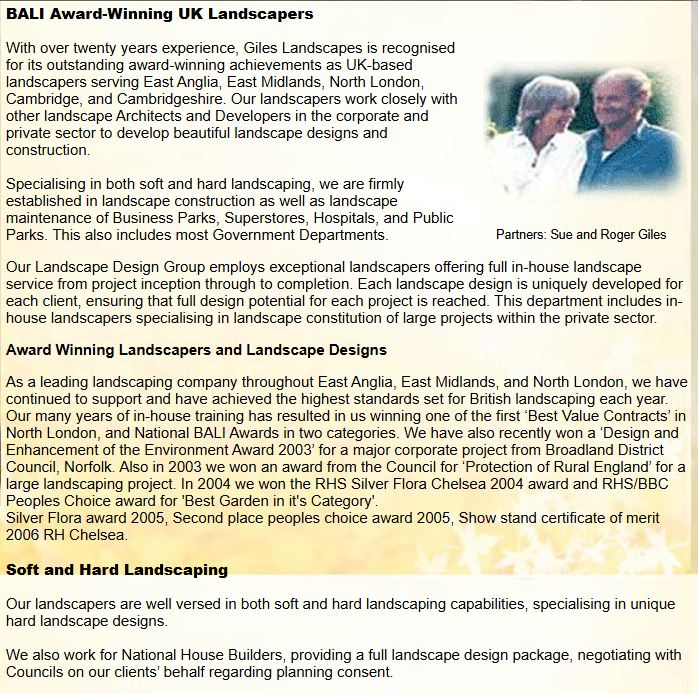
My wife Sue worked massively hard help keeping the Administration and accounts on track through the 90’s though the difficultly with developers and builders with getting paid on time did put massive stress on Sue.. By the end of the 90’s Sue stood back and followed her artistic career plus did some work on TV Panels like Pebble Mill on her early life which was very brave move and helped other people.
THIS IS CLIP FROM MY ORIGINAL BUSSNES WEBSITE

See note above re Lloyds who were strongly behind us at that time we needed overdraft facilities as a buffer against slow paying builders
Although the 90’s were a very tough time and the margins were very tight, we found the building site work very useful and the fact that our techniques on the open spaces produced great results various councils when they had to adopt these areas noticed us and started asking us to quote for Council works. There was one site around Peterborough call the millennium wheel which was a cycle track and I got the impression the council running this site awarded the project to the developments but stipulated they want to use my company for the landscaping works to guarantee a top quality finish on this extensive prestigious project being a cycle track around the whole of Peterborough, though the 90’s we still used to supply teams to large national landscapers on zero Hrs basis to help them complete motorways parks and hospital projects this again was a great learning curve for us, going back to building site work though it was not high profit it was excellent as we always had 3-5 apprentices on our books, they managed to improve there plant recognition considerably which helped further promote the business.
IT may take a little time to get this process setup however this is the “DRAFT” idea.

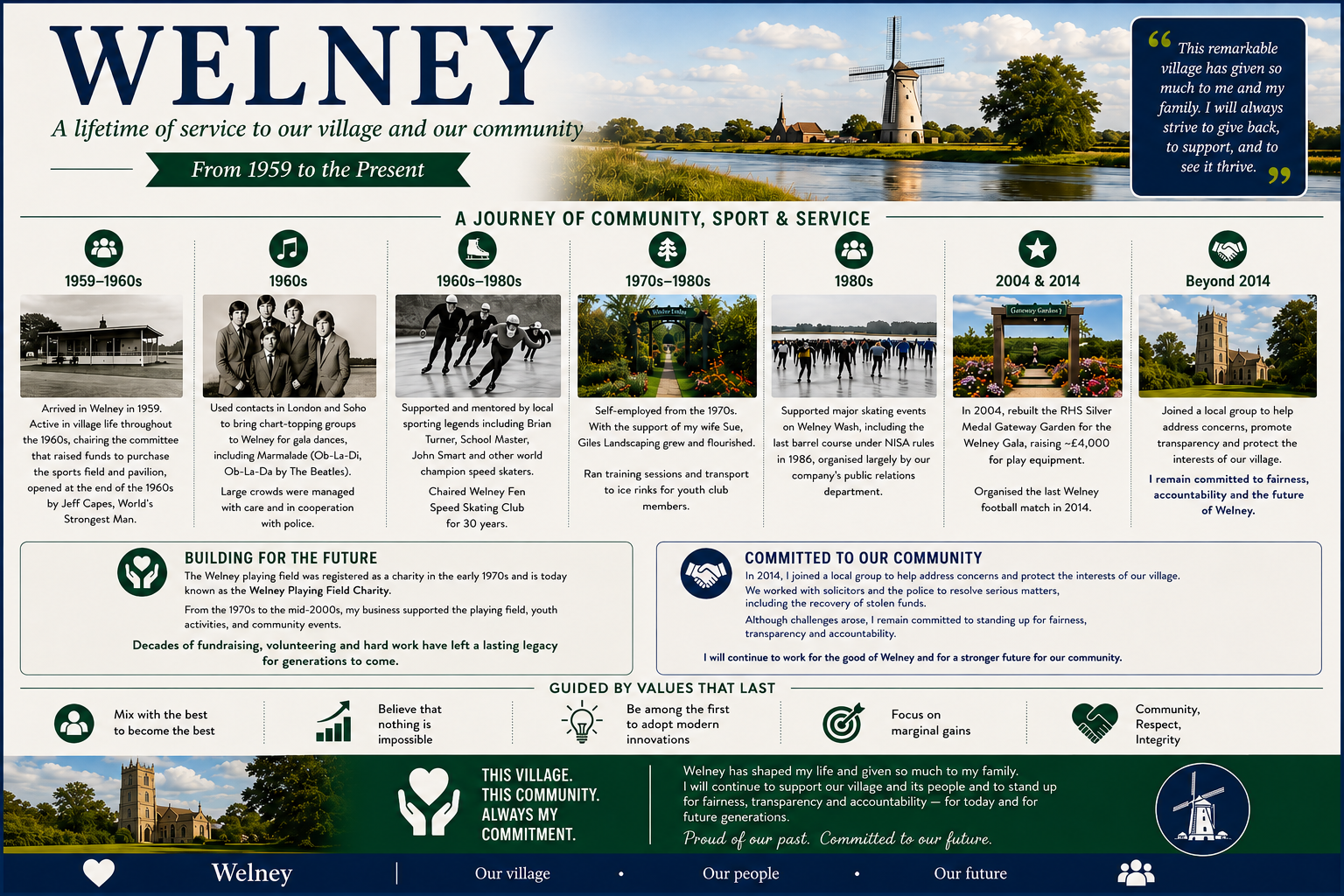
This is just to show my businesses/companies benefited very much from this friendly fenland area/people and did attempt to pay back being very highly active in social commitment in connection with sport and many other activities within the fenland community. See the fenland values/formulas second line above that helped to point me in the right direction
My intention is now to brag to balance the fact at Lloyds BSU describe me as non entity.
SHORTLY AFTETFTER I WENT TO MY ORIGINAL LLOYDS BANK MANAGER TO GETT CLARIFICATION ON EVIDENCE I HELD RE THE ACTIVITIESF MY F D WAS PRACTISING \ WITH IN MY BANK ACCOUNTS ON 27 NOV 2013
My 30 years working with Lloyds Bank by my side abruptly came to an end when i started asking questions about possible legal activities going on within my banking accounts. Lloyds as i have said so many times instead of me helping me catch the criminals gave cover to the criminals knowing it would put me down and then claim my assets.
HE WAS SUPERSEEDED BY POPE A BSU LLOYDS MANAGER MY F D INFORMED MEE POPE HAD RANG WAS TO BE AT MY OFFICE BY MID DAYTHIS WOMAN WAS BLATENTLY RUDE TO ME EVERY WHICH WAY IN A GASLIGHTING MANER THRETERNING TO STRANGLE MY BUSSINES BY REDUSING LENDING , I ARRANGED A 1 TO 1 MEETING WITH POPE TO FRONT HER UP BUT THIS PERSON WAS TAKEN OF MY CASE THE MEETING NEVER HAPPEND
[ LOOKING BACK IT IS CLEAR TO ME NOW THAT LLOYDS WERE TRYING TO MENTALY DESTROY ME FOR FEAR I WOULD EXSPOSE THE MONIES LAUNDERING ACTIVITIES ]
As a neurodiverse individual, I don’t naturally “brag”—but let’s be absolutely clear: after 30 years of a successful, stable partnership with Lloyds, no one gets to rewrite my record. Attempts by BSU to gaslight me into believing I was a failed or incompetent businessman are not just wrong—they are completely detached from reality.
For three decades, I built, sustained, and proved my business capability. That is fact, not opinion.
What’s even more concerning is the coordinated effort by senior police figures to discredit me—branding me a “vexatious complainant” while, at the same time, providing cover for individuals engaged in deeply questionable conduct. Institutions that are supposed to uphold justice and accountability—the FCA, NCA, elements of the judiciary, and Action Fraud—did not just fail to support me; they compounded the situation. Meanwhile, political figures stood by and ignored it.[i must just qualify i had much respect for many brave police officers ] as i also had respect for many M P’s and i rated many coal face bank managers as excellent ]
But here’s the critical point: I hold the evidence. And the evidence does not lie.
Early in my career, yes—my neurodiversity created challenges in conventional business environments. But once I understood it and put the right structures in place, everything shifted. What others saw as a weakness became my greatest advantage.in the late 50,s i came out of the KENT farm institute i worked for a w h Cragg then Reg Alder both very futuristic farmers although i had run ins with them they both head hunted me back i learnt allot and we became life long friends
My ADHD gives me an exceptional edge in crisis management, rapid decision-making, and high-pressure environments—areas where most people fall apart. When it matters most, I outperform. That is not arrogance; that is demonstrated ability.
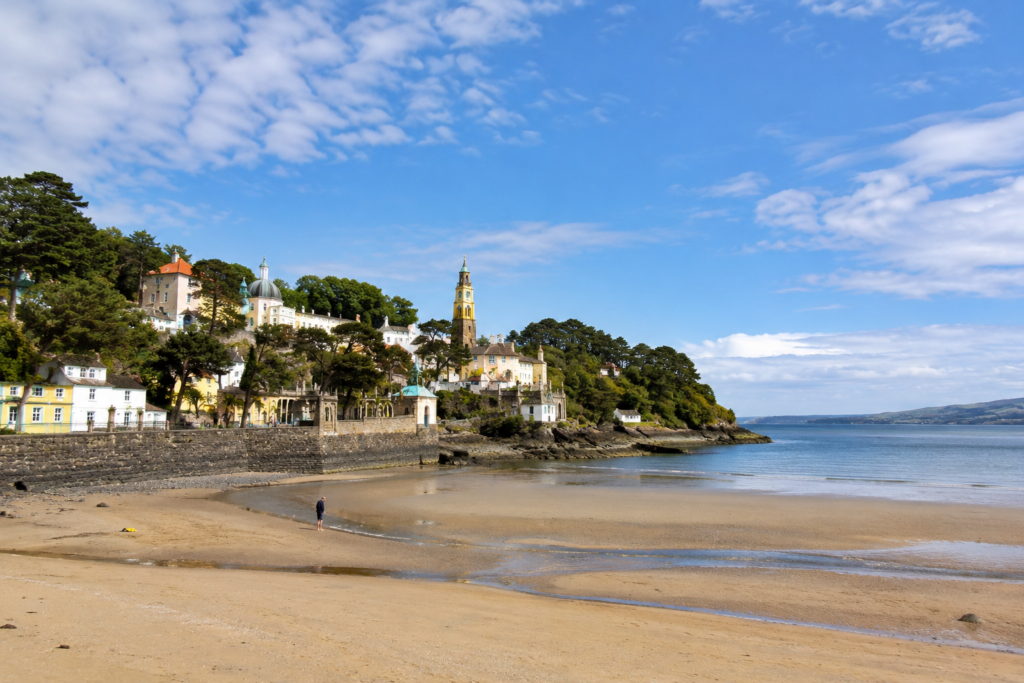
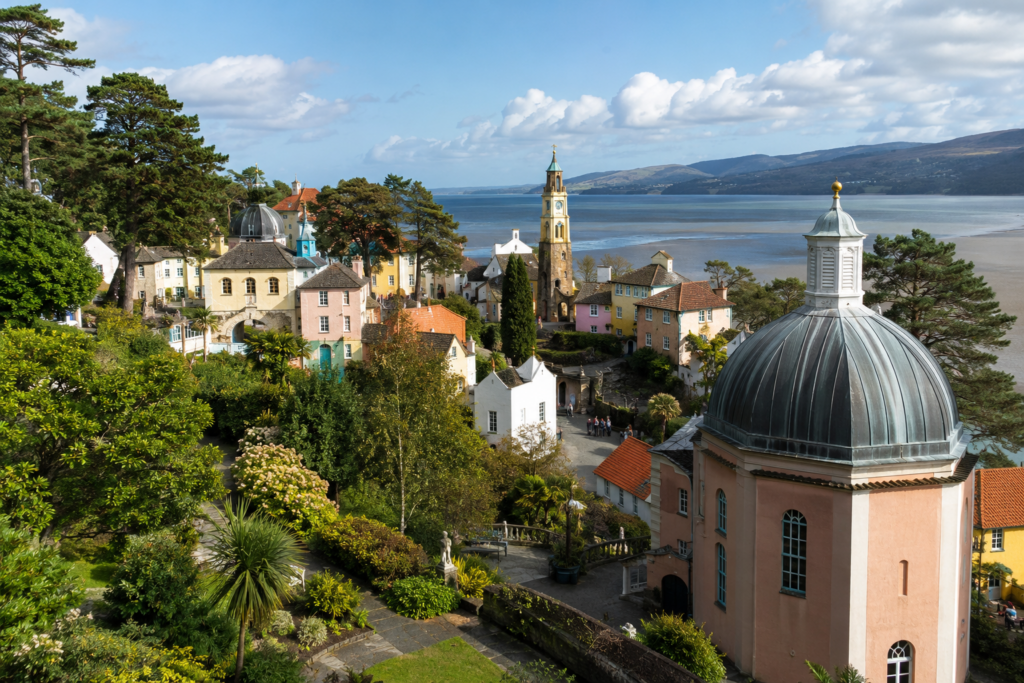
Portmeirion, Wales
Joining British Landscape Industries at the end of the 1990s proved to be a turning point for the business, opening doors to opportunities that would have been difficult to access otherwise. One of the most valuable initiatives was the European-funded ADAPT training programme. This highly successful scheme provided fully funded training and development opportunities, allowing me to send members of my team to study landscaping practices across Europe.
Through the programme, we travelled to a number of inspiring locations, including Barcelona, Oporto, and the Loire Valley. These visits gave us the opportunity to see first-hand how our European counterparts organised and managed their landscaping businesses. We observed different approaches to maintenance, staff training, project management, and customer service, gaining ideas that could be adapted and applied within our own company. At a time when the landscaping industry was becoming increasingly professional and competitive, the experience was invaluable.
An additional benefit of the programme was the provision of a state-of-the-art computer system, also funded through the scheme. While this was an exciting step forward, the installation was not without its challenges. The technical support team responsible for setting up a video link with Otley College encountered repeated difficulties and were unable to establish a working connection.
Fortunately, help was close at hand. Our local IT expert, Bob Frusher from the nearby village of Welney, came to the rescue. After receiving a phone call, Bob simply walked across the meadows to our office, assessed the problem, and within half an hour had the entire system operating perfectly. Thanks to his expertise, we were able to take full advantage of the new technology. At the time, very few landscaping businesses were using video-linked training facilities, and we were probably among the first in the industry to benefit from such advanced communication technology.
Beyond the technical and educational advantages, the ADAPT programme also created valuable networking opportunities. The relationships formed during these European study visits often proved just as important as the formal training itself. We met contractors, designers, managers, and horticultural professionals from across the United Kingdom and Europe, many of whom became long-term contacts and friends.
One particularly memorable connection was with the gardening team from Portmeirion in North Wales. During one of our training visits to Barcelona, several of us stayed on Las Ramblas, enjoying both the educational programme and the camaraderie that developed among participants. The Portmeirion gardeners were a lively and welcoming group, and friendships quickly formed.
These connections continued long after the training course had ended. Some time later, Giles Landscapes team hired a people carrier as wee were invited to visit Portmeirion for a long weekend. The visit gave me the opportunity to experience first-hand the famous village and its remarkable gardens and landscapes. Set against the stunning backdrop of the Welsh coastline, Portmeirion was unlike anywhere else I had visited. Walking through the grounds with the gardeners who maintained them provided a fascinating insight into the challenges and rewards of managing such a unique landscape. It was also a reminder of how friendships forged through professional development programmes could lead to experiences that enriched both personal and professional life.
The value of these relationships became particularly evident when I was preparing a tender for the major Gunpowder Park project in Enfield. While compiling the submission, I encountered difficulties in accurately pricing the substantial grass maintenance element of the contract. Rather than relying on guesswork, I contacted a quantity surveyor from Wales whom I had met through the network established during the ADAPT programme.
Her advice proved invaluable. Drawing on her experience and specialist knowledge, she helped me calculate realistic and competitive rates for the work involved. This guidance gave me the confidence that the figures in our tender were both accurate and sustainable. In the end, her assistance was a key factor in helping us secure the contract.
Looking back, the ADAPT programme delivered far more than technical training. It broadened our horizons, introduced us to new technologies, exposed us to international best practice, and, perhaps most importantly, created a network of professional contacts and friendships that continued to benefit the business for many years afterwards. The connections made with colleagues from places such as Portmeirion demonstrated that sometimes the greatest value of training lies not only in what is taught in the classroom, but in the people you meet along the way.
TO SE THE COMPLETE D I WELLERS LETER PLEAS GO INTO MY BANKING FRAURD PAGE
I do understand the frustration you must feel about this and I am sorry you have not had the outcome you had wished for. My suggestion would be for you to seek independent legal advice to see if there are any Civil remedies available to you. Please make contact with T/DC Andrew Smith who will arrange for you to collect the material you have provided to us.
Yours sincerely,
Richard
Richard Weller
Detective Inspector – CID West
above is last Paragraph of D I Wellers letter he shut my 2 nd case down siting lack of evidence but in point of fact i have evidence that there were a hundred or so scanned pages ,T/DC Andrew Smith was a bough to interview bank personnel /people that could take the investigation into the heart of Lloyds bank
m
I feel that DI Weller closed this case as DC Andy Smith 1430 had it on the cards to interview Fuggle and he knew that the interview could take the investigation behind the closed doors of Lloyds Bank and for various reasons possibly because the police knew that taking on Lloyds would take a mass of there time Lloyds would be also powerful in would be impossible to win. The only man to have a 100% win was Anthony Stansfeld/ His Chief Constable putting the HBOS villains behind bars. . It seems to me that Whilst i was negotiating with Lloyds Bank i had a meeting on 14th March 2014 at this meeting Lloyds BSU manager indicated that Lloyds would be fully behind me and back me on any reasonable projects i wanted to take on. Around this time i had a woman working for me that i had hired from Hayes financial recruitment. Who helped me put forward points to Kevin Harris of Lloyds BSU. But suddenly this lady seemed to have some sort of breakdown and i was rather rail roaded to take on this man Fuggle in the capacity of experienced consultant. But in point of fact this man was no professional business consultant he was just a filed business man who had failed on many levels. and could of well be a double agent within Lloyds bank. and the liquidators Undebt. Please take note of Paul Fuggle capacity of business development manager for Undebt whose address appears to be a couple of streets away from Lloyds Bank at Bristol. Norfolk Police held written statements from 3 respectful and honest people that flagged up there opinion that Fuggle and the person Robinson i had hired were behaving in a nefarious way sabotaging my business clearly so Lloyds could wind me up.
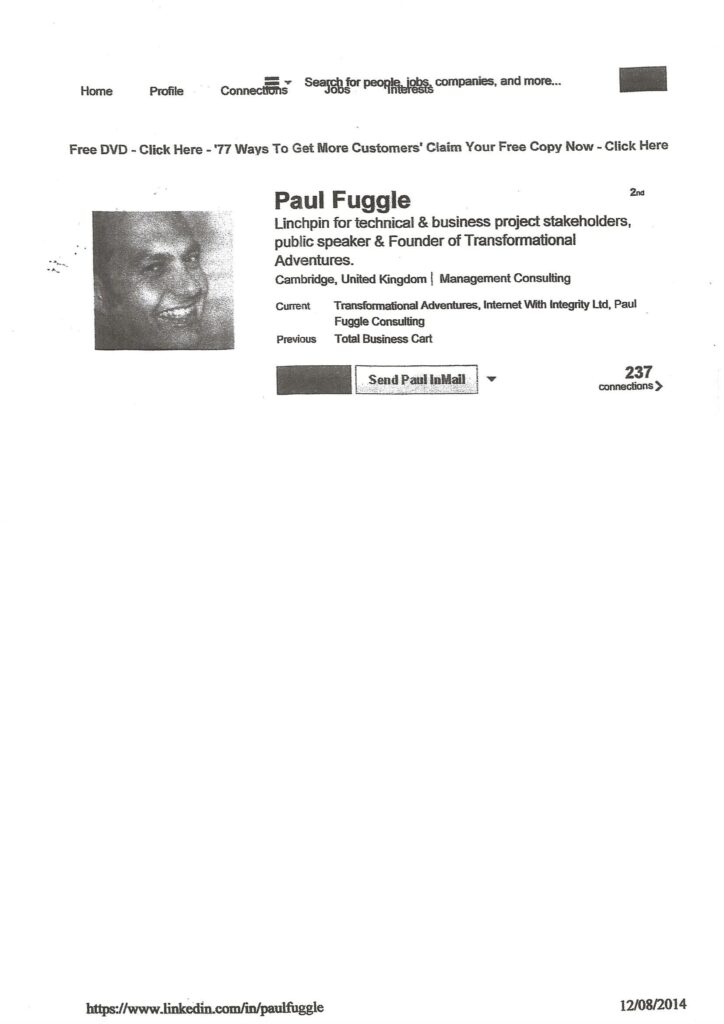
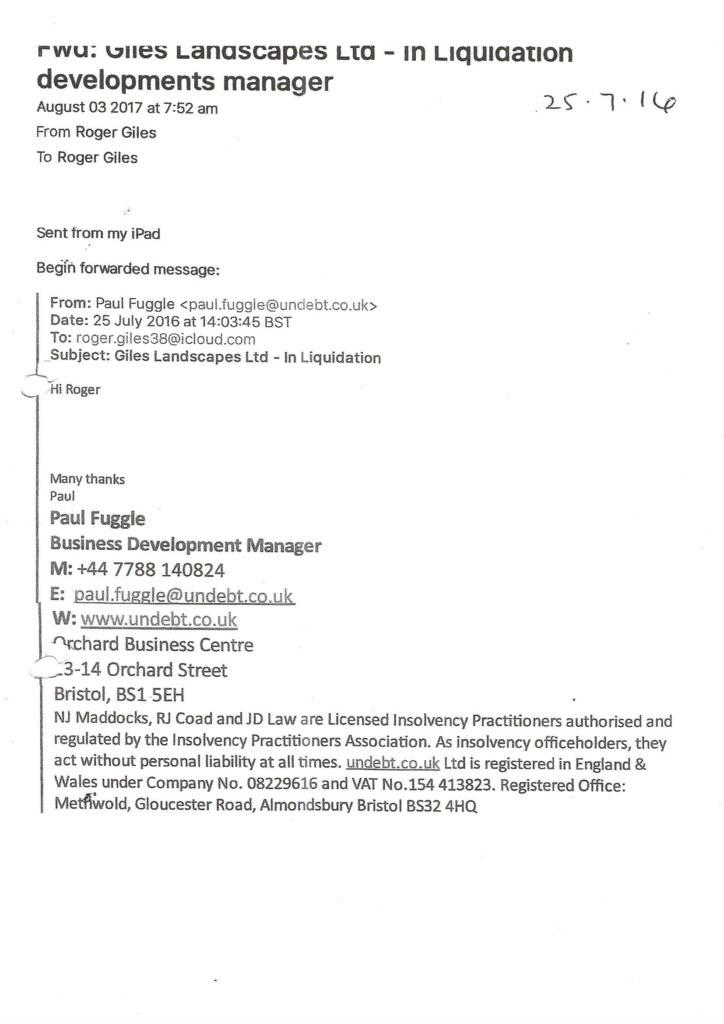
- Please note that Fuggle was working with Robinson on some sort of scam called clear focus consulting. Where Robinson is viciously painting a picture of Fuggle. As somebody with business potential and integrity.
You can just see the face of Robinson at the top of this document. It seemed very strange that Fuggle his business development manager for Undebt Liquidators while also in co with Robinson are running some sort scam to lur punters in and give them business advice.
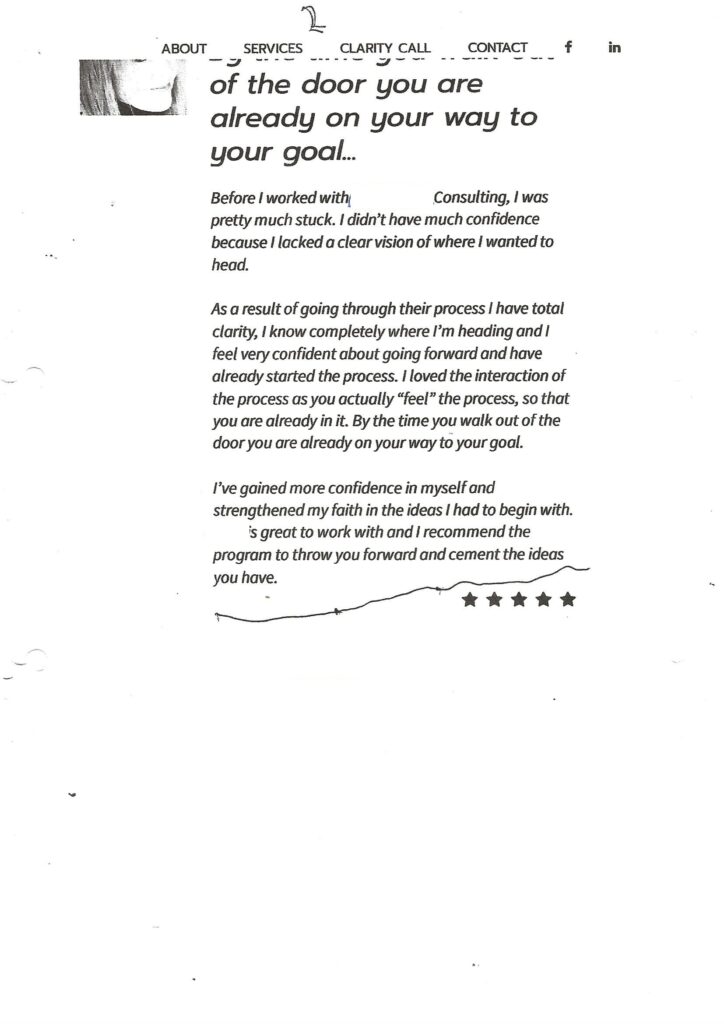
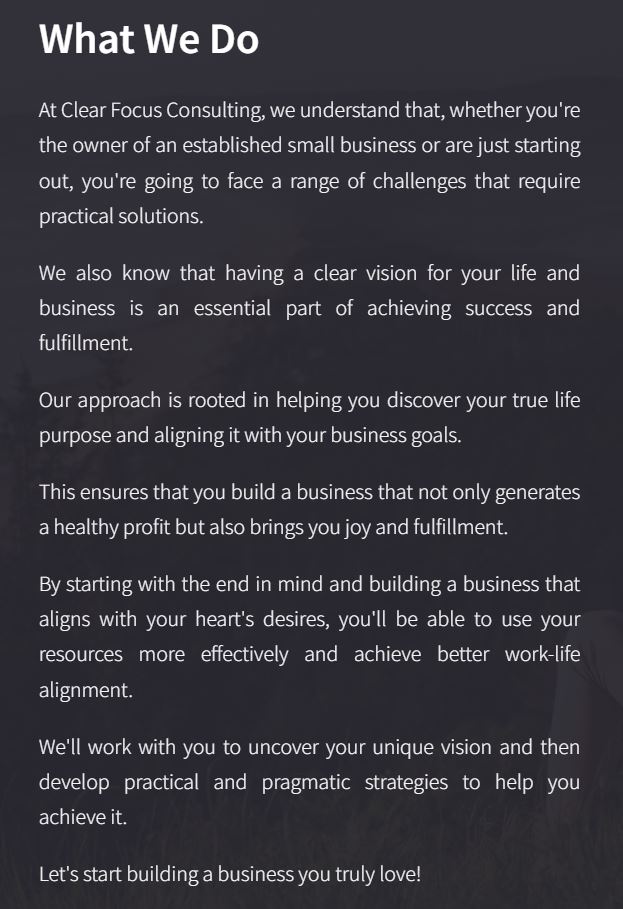
N.B Andrew Bailey, when he was CEO of FCA, has seen all this evidence and his reaction I probably would call, now, less than satisfactory. Please see this video of me talking to Andrew Bailey who is now the governor of the Bank of England. CLICK HERE on YouTube (6:08) you can see me talking to Andrew regarding this whole matter
More information that the police computer should have had on it, that DI Weller seemed unaware of – I would like to be quite clear that the letter instigated by Horto Osario of Lloyds Bank states Mr Giles cheques were paid out of Mr Giles’ business account on the correct mandate and Mr Giles problem was caused by himself, not having regulatory processes to monitor what was going on financially in his company. In point of fact, Mr Giles went to his bank manager of 10 years on 27th November 2013, flagging up his severe concerns about financial anomalies, especially in the secondary account. This was 8 months before his company went down. You see the evidence I have provided -t o Norfolk police ,
if that had been given to me around the 27th November 2013, I could have stopped the criminals in their tracks. You can see the hand writing of my ex financial director on the top right hand side of exhibit 1. It is very similar to a cheque that went out of my account, that I have shown a copy of as being written even before the cheque numbers were issued to my company.
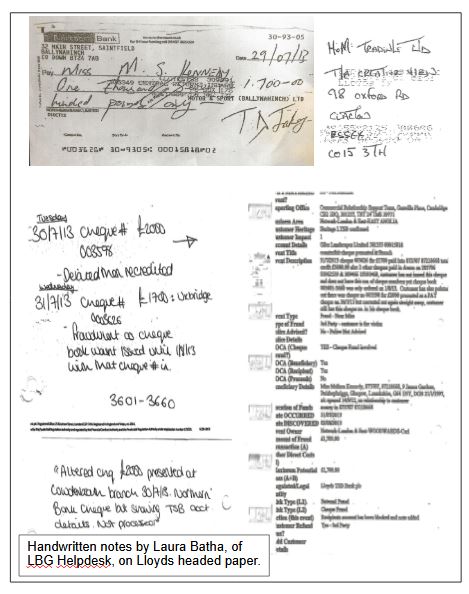
I personally feel that after 6 years of the senior police sending me down every blind alley and all the watch dogs failing me it is very dishearten that I DC Weller recommends going down a civil route with my allegations. Which in fact have already done so which cost around £50,000 of families monies which got us exactly nowhere.
It totally beats me that when the police and the watchdogs know that Lloyds coverups destroyed me and thousand of other victims taken all our resources and other money they suggest we do there job and go to court against them ourselves. I put a large amount of blame to the tories for ignoring the William Wragg Hansard Report 2018 and many other similar ones.
From the above extract you can click on my video where i can be seen talking to Andrew Bailey in 2019.
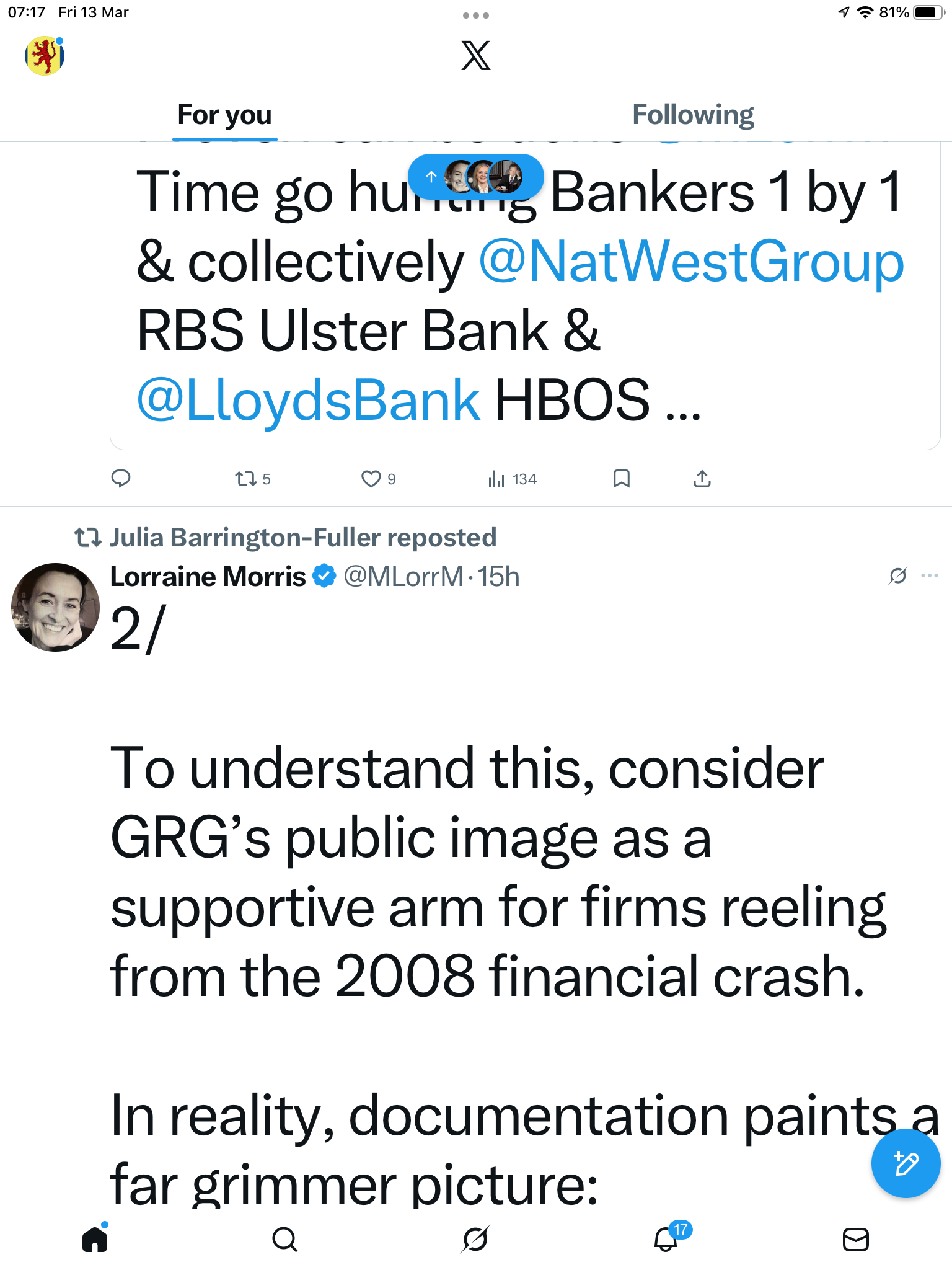
It is clear throughout the banking industry the nefarious activities of many major banks totally and intentionally went out to sabotage and destroy many SME’s and many other business companies so they could claim there assets to further reimburse there own reserves, in the case of GRG they denied making any profit out of the destruction of there business customers but in fact it turned out they were making billions.
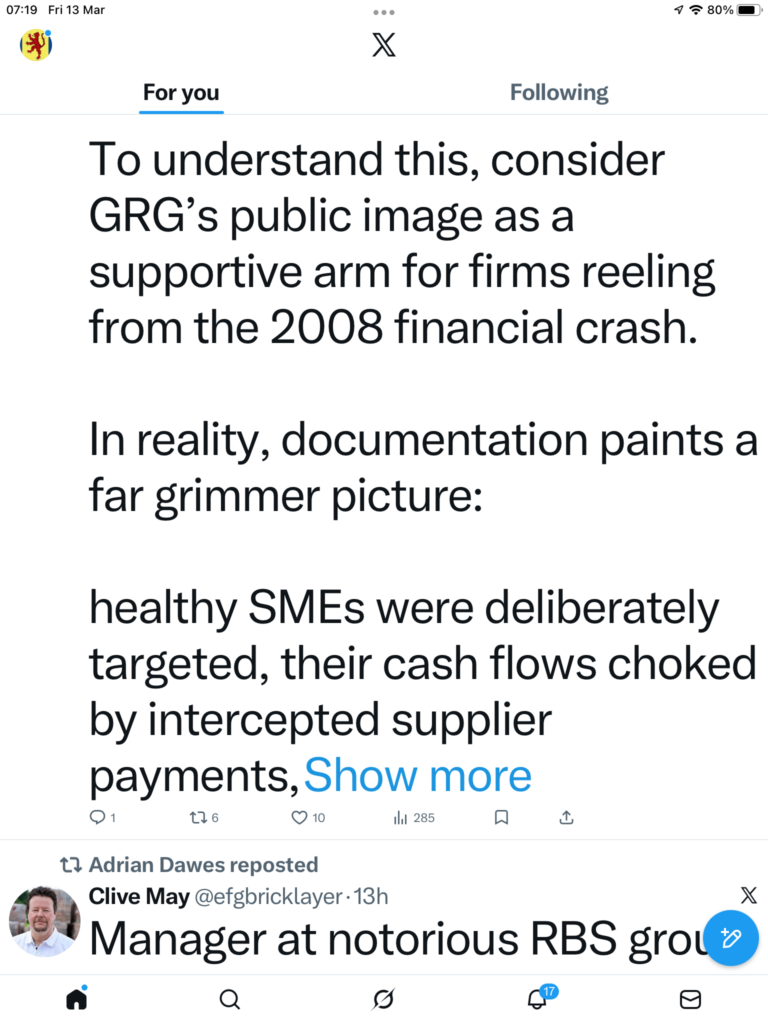
These observations totally underpin what i said on the last document.
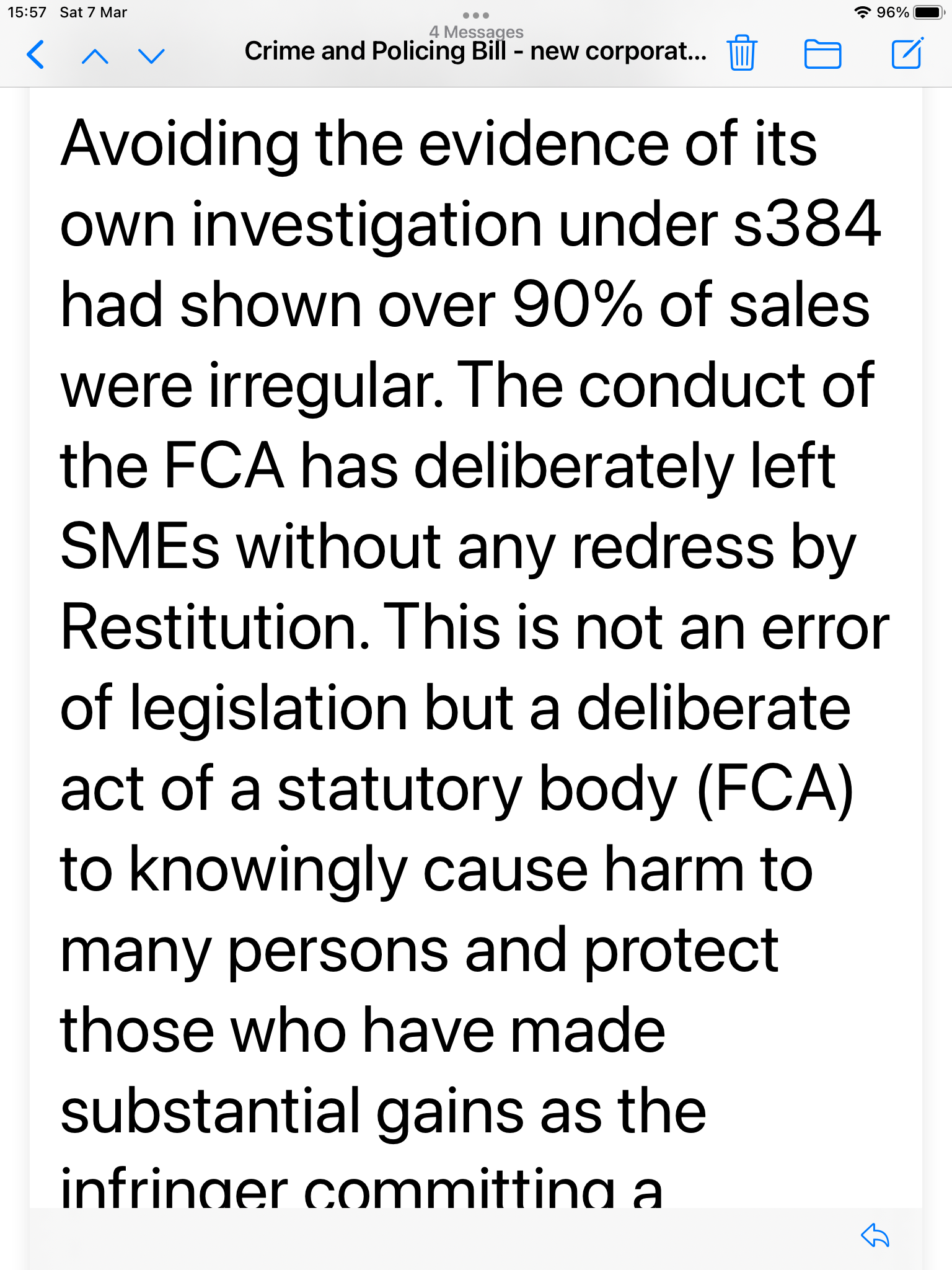
Further documentation which shows the FCA what they are/where.
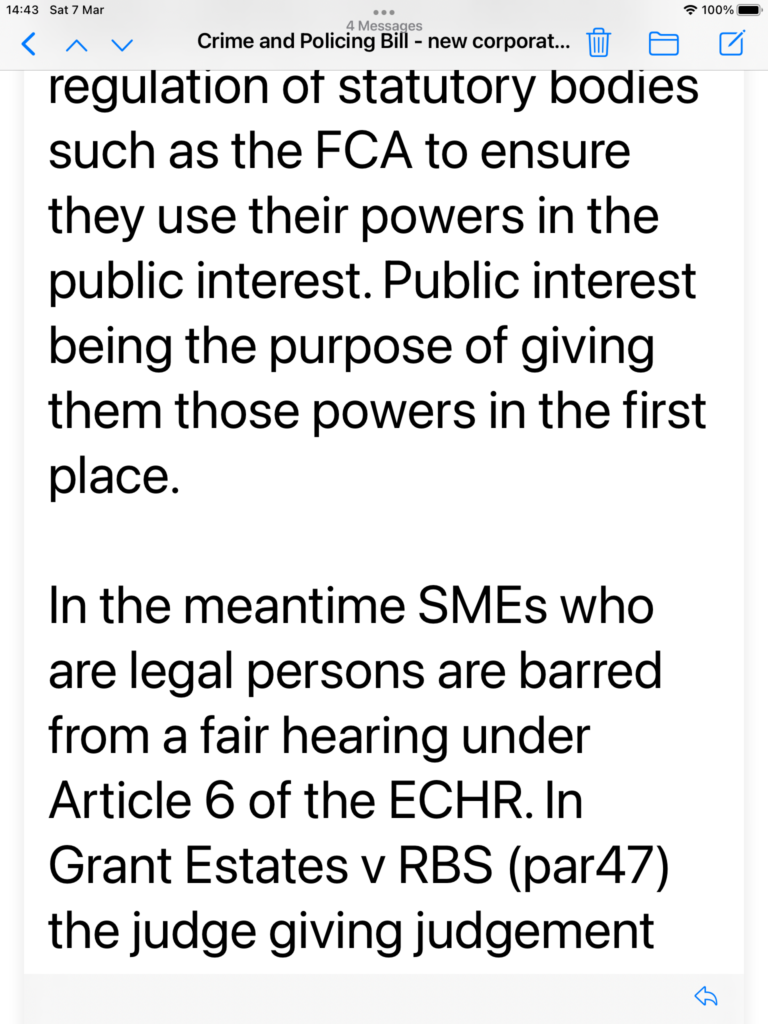
It even seems that legislation is twisted in a way to sabotage there justice.
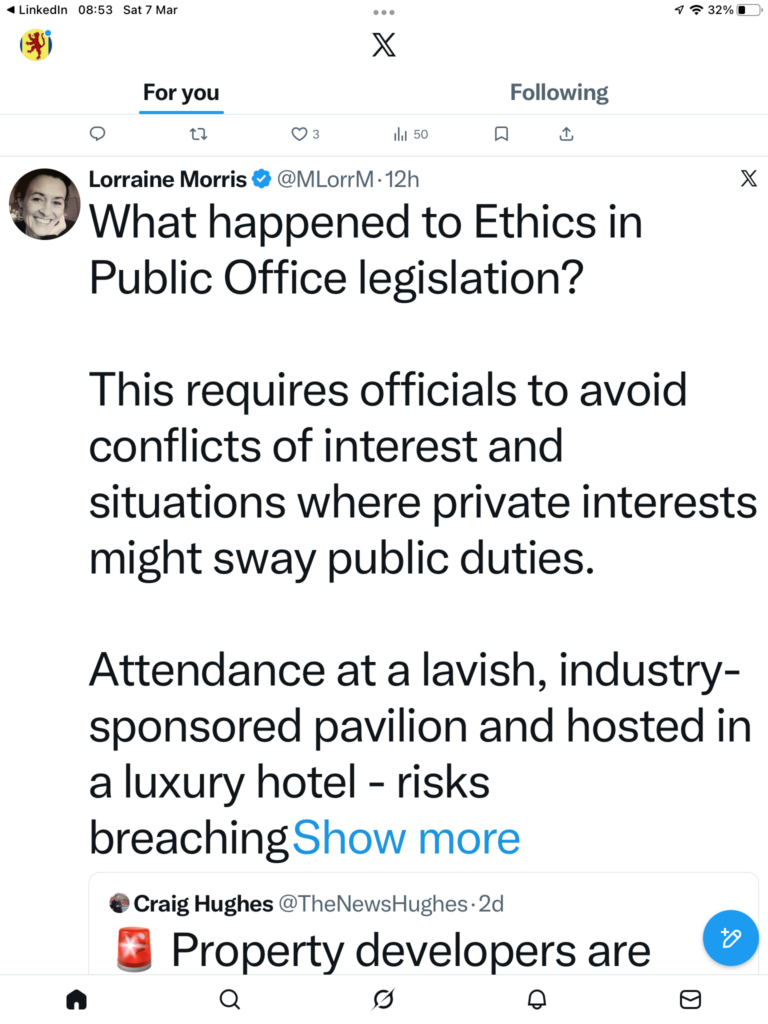
I am personally relying on the labour government to bring back democracy and fair ethical behaviour. I would like to point out the Mr John McDonnell has set the ball rolling with his very thought out recent speech in parliament. Please see below link
https://parliamentlive.tv/event/index/fce4a904-65be-4d18-ba80-208d0763be1f
This debate is very important and the fact that so many MPs backed this. It has given us victims considerable hope that the labour people will do something for us. The opposite of what the tory party that seemed to want to push it out to long grass.
https://parliamentlive.tv/event/index/670dc9b1-a07f-466e-97e1-741d5d10f206?in=09:30:19
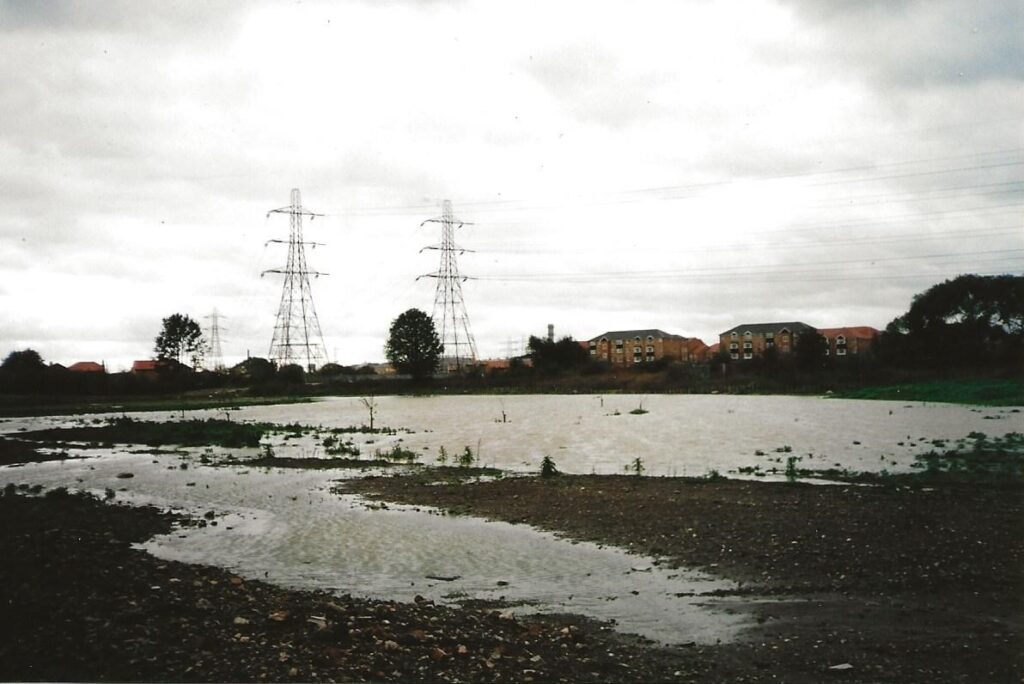
Start of my bragging campaign – Gunpowder Park, Enfield.
This is the scene i was greeted with on the first day my company was on site at Gunpowder Park. All the documentation had been signed and i had agreed to take on the contract. I could not back out. This could have potentially ruined my company. Within 10 days into the project my ADHD high capacity in crisis management i had the situation solved and the equipment and plan in place to resolve this very quickly.
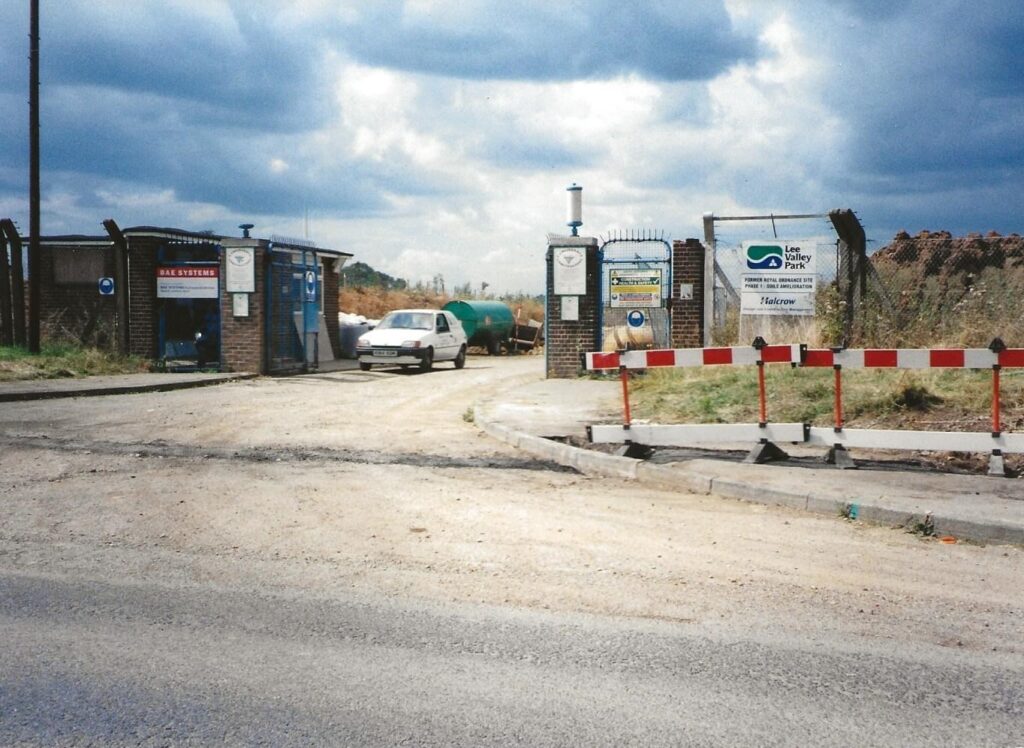
This was how the site looked before we took it over, if you look closely on the left the original gatekeepers house had not been demolished. We was allowed to use this is as a mini office.
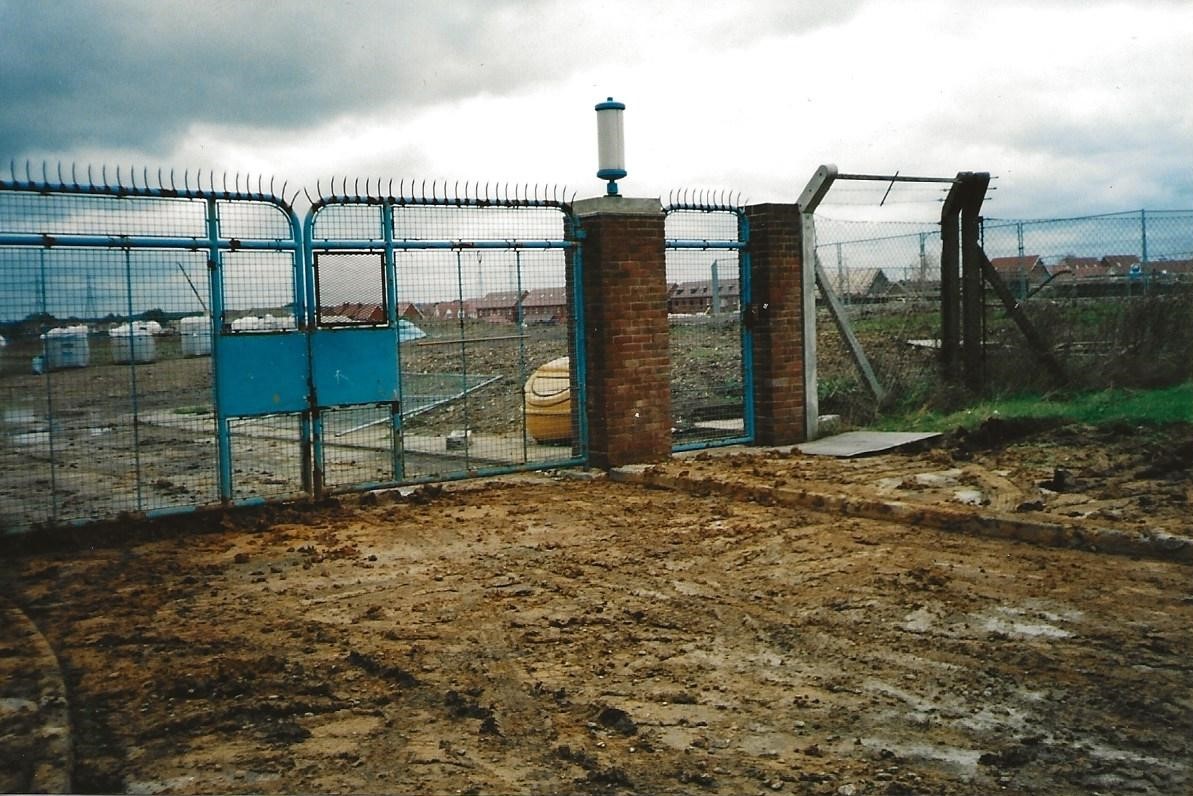
Not a very welcoming view. Before we started.
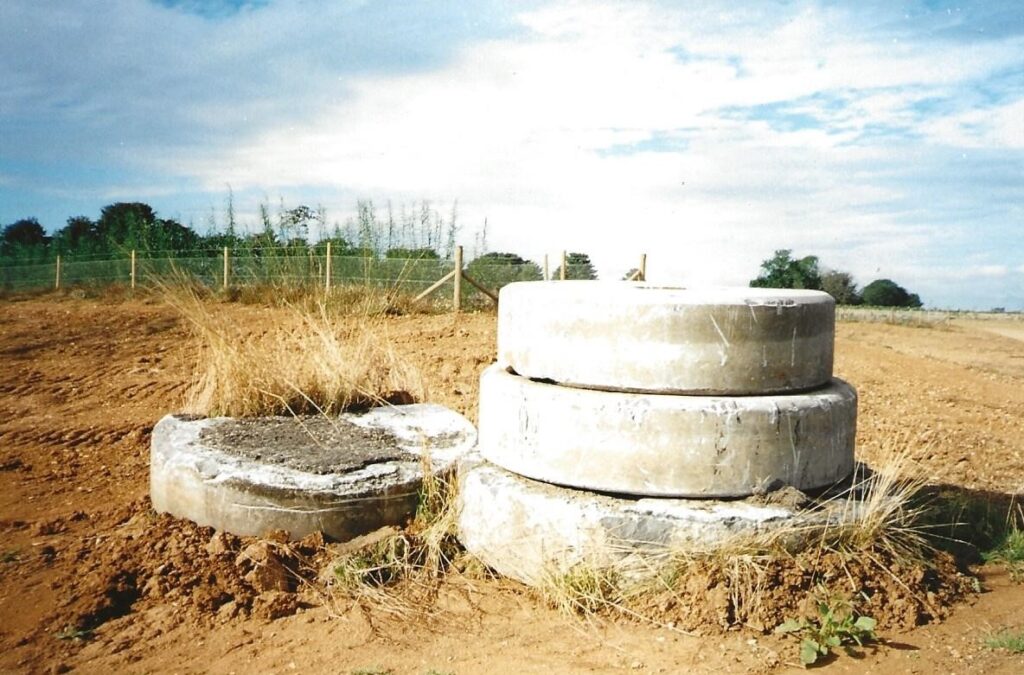
Presumably these were mill wheels for grinding gun cotton?
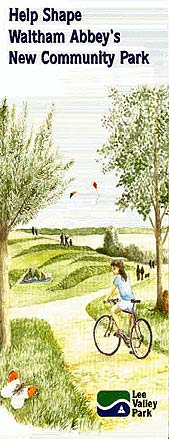
Please note – when we took over this site the specification was to do all tree and shrub planting on top of buns or raised areas which depicted shockwaves due to explosions. The groundwork contractors employed by Lee Valley parks had had because of time restrictions no option but to build these mounds or buns with soil that was so wet it was almost slurry. Now we had to plant these areas but they had set like concrete. This impossible situation i had under control to my advantage and a great advantage to the company again my crisis management and neuro diversity put my company on top.
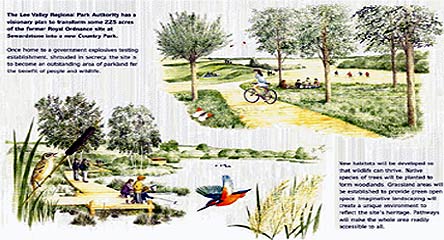
The Lee Valley Regional Park Authority has a visionary plan to transform some 225 acres of the former Royal Ordnance site at Sewardstone into a new Country Park. Once home to a government explosives testing establishment, shrouded in secrecy, the site is to become an outstanding area of parkland for the benefit of people and wildlife. New habitats will be developed so that wildlife can thrive. Native species of trees will be planted to form woodlands. Grassland areas will be established to provide green open space. Imaginative landscaping will create a unique environment to reflect the site’s heritage. Pathways will make the whole area readily accessible to all.
Screenshot from our original website.
This work has been to be finsihed there was another major problem arisen that caused great problems and with coorperation LDA Lee Valley Parks and HELCRO the main engineering contracros we managed to neutralise this main problem without massive expensive to my company Giles Landscapes .
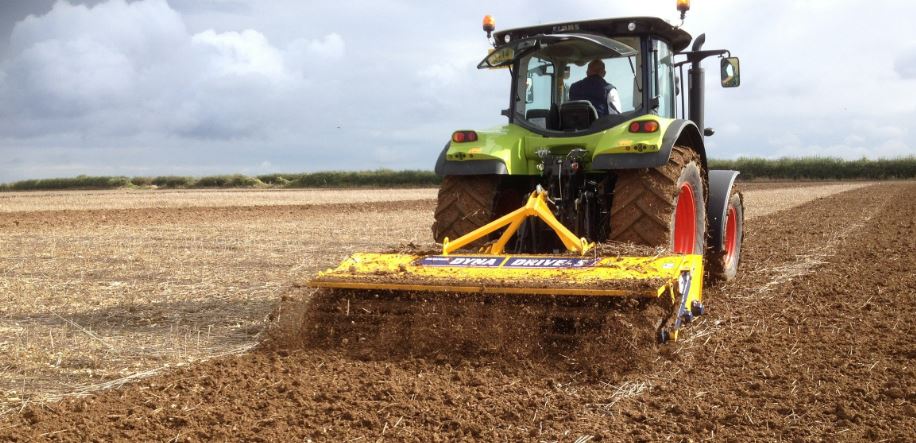
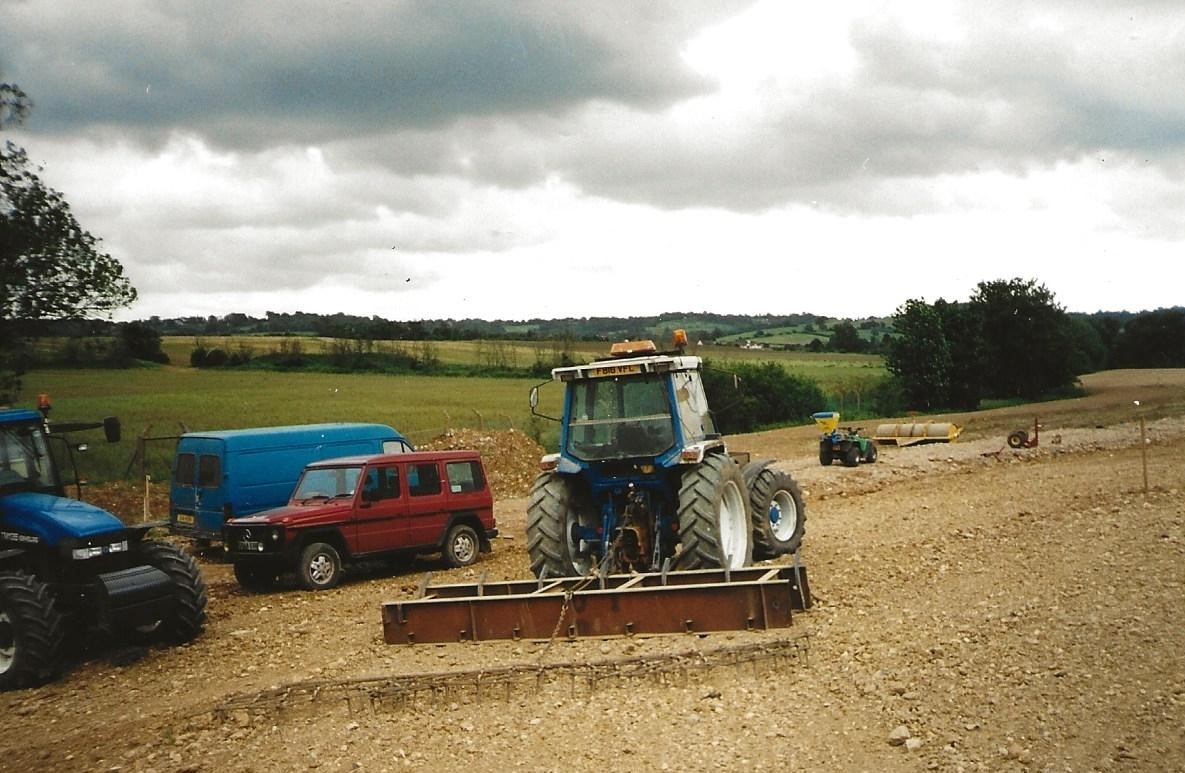
As i had 30 years working alongside contractor Ray Smith from Lakenheath I discussed the project with him and what he was expected to achieve and from then on I gave full autonomy. I understood he knew more about soils and cultivation and heavy plant and machinery than i did. I knew he was completely trust worthy. as this went on i could see Ray was having a massive struggle his machinery was get smashed up continually almost on a daily basis as there was a large amount of concrete that he had to prepare for wildflower and grass seeding. fortunately Ray was allowed by me by to converse directly with the head engineer Halcrow Civil Engineers. Ray on a daily basis during a coffee break used to converse with Halcrow no.2 civil engineer running the site the fact they had a good relationship helped us all as it was clear under the disastrous soil conditions ray was running over his time to complete the project i was a bout to have a in-depth discussion with him but he had already used his initiative and attended at the weekend the Cambridge machinery sale at Sutton and he has bought a lorry chassis which he cut in half to make a heavy duty leveller and also bought a dyno drive that was absolutely amazing and could travelling the ground at high speed without getting smashed up because it ran on top of the ground driven by its own friction. this was a total god send. also the fact that the young lady engineer from Halcrow had worked along side ray noting all the problems occurring not of his own making. when my general manager Len Cutchey did a spreadsheet on all costs that we consider an extra over in connection with the seeding project. after a meeting will Halcrow and the client & the designers LDA and they very fairly reimbursed a sum of money that was directly passed onto my sub contractor Ray Smith.
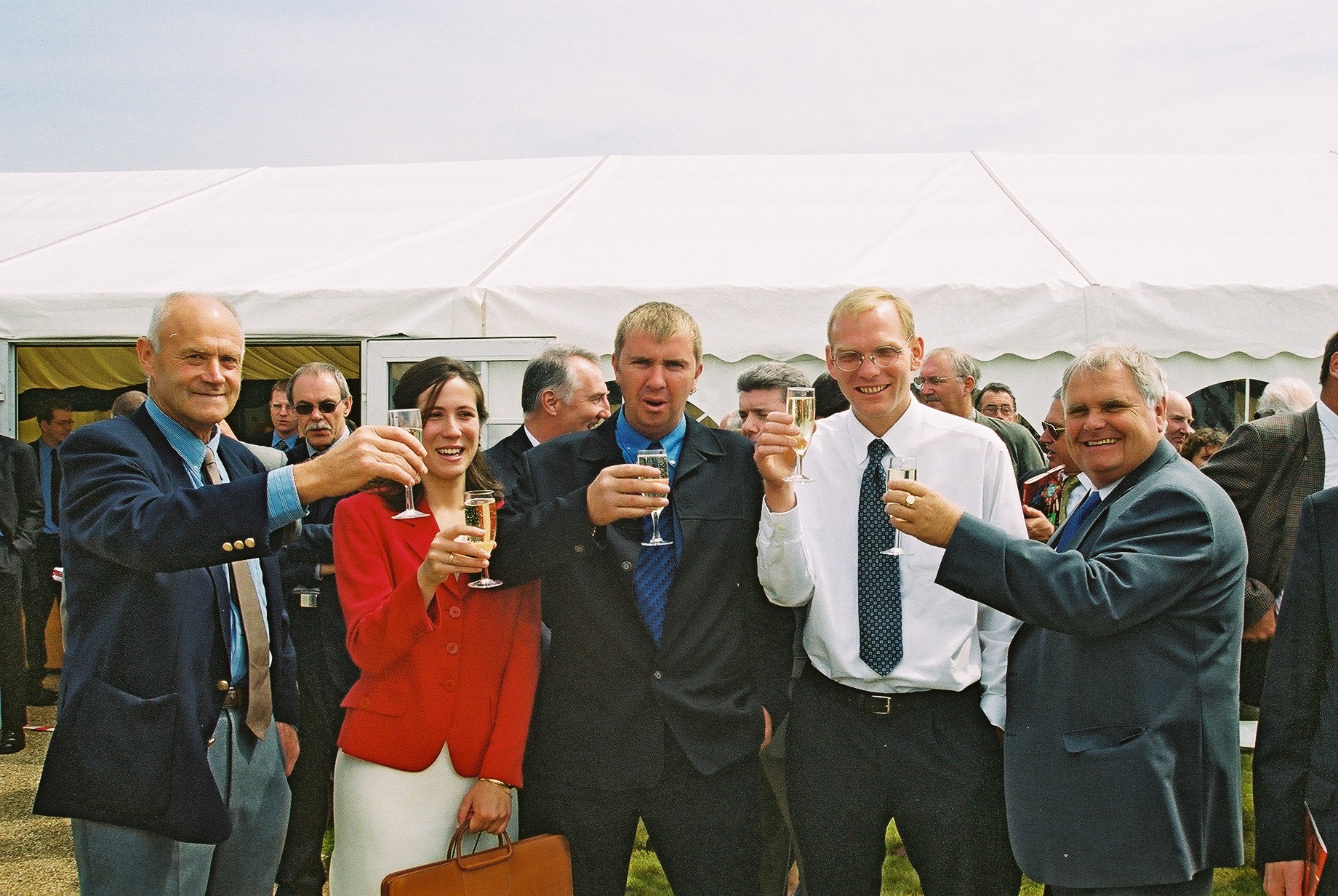
The chief engineer on site from Halcrow i will guess his name after all these years “Damien Debski” it may be right it may be wrong.. the lady in the red jacket was the second engineer (this may have been here first project)after university] n charge of the site daily. the fact that we managed to have a whole team had a brilliant relationship with each other it helped us overcome so many problems. that could of detracted from a good result from the project.[ i feel i must add Len Cutchey on right my general Manager was an asset helping us lift our game to cope with these prestigious contracts plus his son James was a very useful team leader also Andrew Cutchey was a main player in our maintenance team]
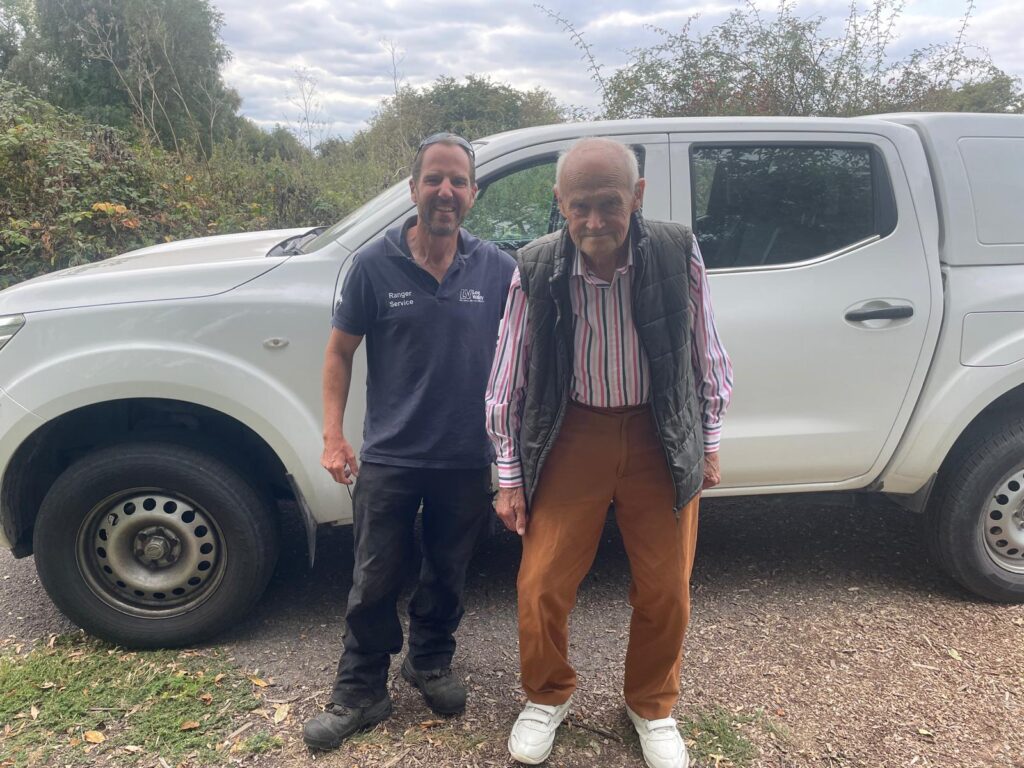
Tim Crane – Head Ranger – Lee Valley Park / Roger Giles recently at Gun Powder Park. I very much appreciated Tim giving me a guided tour of the park to see the finished article as it is today. Tim’s enthusiasm was very uplifting.
The LDA Design specification stated that no topsoil was to be used on the park. Planting was to be carried out directly into subsoil, fertilised with heat-treated pelleted sewage sludge. From memory, the product was called Biogram.
When we took over the site, the groundworkers were attempting to construct the planting bunds. They were extremely dejected, working in very poor conditions—it rained almost every day. Eventually, they pulled off site with only two-thirds of the bunds/mounds completed.
As March arrived, the weather turned completely dry. We initially thought this would allow us to move into top gear and complete the planting. However, the reality was quite different. The previously wet subsoil bunds had set like concrete. I knew that if we forced planting under those conditions, we would likely lose a third of the plants in the first season, and the remainder would struggle to establish.
I held several meetings with colleagues and on-site experts, trying various pieces of equipment, but nothing worked. At the same time, we had a very large order of Biogram pellets pending delivery. The supplier’s representative was understandably keen for us to accept it.
Knowing that the Biogram company employed a retained soil scientist, I suggested that if this highly qualified expert could provide a free, in-depth report on the soil conditions, we might find a way forward. This was agreed.
The report concluded that the existing soil conditions were not fit for purpose. The recommendation was to double-dig the planting areas to a depth of approximately one metre using a 360 excavator.
I forwarded this report to LDA Design. Around 7–10 days later, I received confirmation that their client, Lee Valley Parks, had approved the double-digging as an extra over the contract. They agreed to cover the cost, acknowledging that the poor soil conditions were not of our making.
(Clearly, a detailed report from a highly experienced soil specialist carried more weight with the client than my own recommendations.)
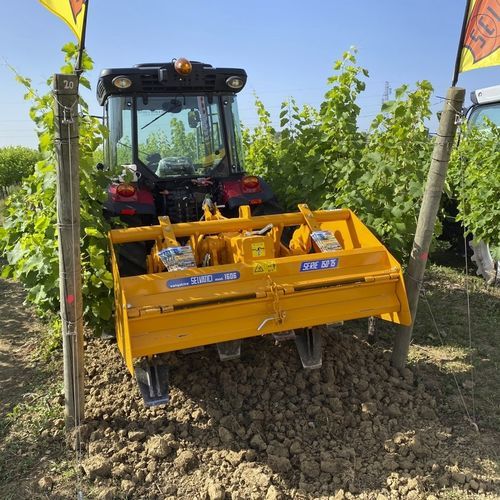
My local lee vallly agriculteral contractor had an old rear-delivery farmyard manure spreader, which we used to distribute the Biogram pellets across the bunds—this worked well. Fortunately, he also had a colleague specialising in landfill reinstatement who owned a spading machine. He advised that this machine could incorporate the Biogram pellets into the soil to a depth of 400–500mm in a single pass.
This proved to be a game changer. The machine conditioned the soil into an ideal planting medium—I was amazed at the transformation.
We then used the manure spreader again to apply a layer of bark mulch. Planting followed: small transplants and whips were notch-planted, while root-balled and larger trees went in with ease. The job was completed perfectly.
Spading machines are ideal for restoring and preparing previously used or compacted land. They gently break up hard soil, improve drainage and aeration, and evenly mix in organic matter without damaging the soil structure. This makes the land healthier, easier to work with, and ready for successful planting or redevelopment.
Technical Note (for experienced landscapers):
Subsoil typically takes 2–3 years to develop a healthy soil population capable of supporting strong plant growth.
(A “soil population” refers to fungi, worms, microbes, etc., which bring life and structure to the soil.)
Key factors that contributed to success:
- LDA Design specified that all plant roots were to be dusted with mycorrhizal fungi powder prior to planting. For more information please visit https://www.rhs.org.uk/biodiversity/mycorrhizal-fungi
- Biogram, being derived from treated sewage sludge, is highly organic and promotes soil biological activity.
- Bill Wade of Double U Nursery (a supplier I had worked with for over 30 years) ensured that bare-root plants were lifted the day before planting. This helped retain their natural soil microbiology around the roots—particularly important when planting into subsoil, where every marginal gain matters.
Thanks to the combined efforts of the client, contractors, and suppliers, everything came together. Despite this being one of the most challenging projects we had ever undertaken, we achieved some of the best planting results.
There was almost 100% survival of shrubs and trees, along with excellent growth in the first year.
It’s worth noting that regulations regarding the use of sewage sludge may have changed since then, particularly concerning heavy metals.
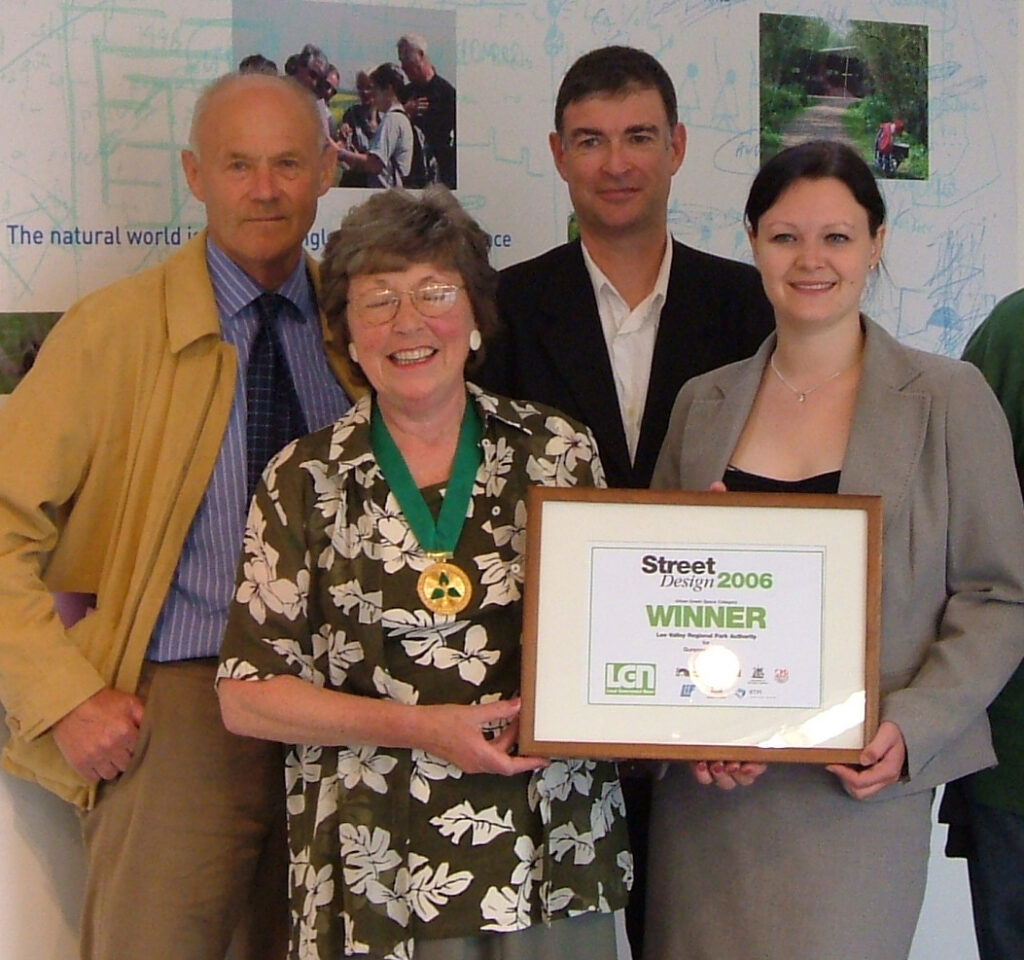
Local Government News – Street Design Award 2006
Gunpowder Park, Lee Valley Park Authority
Picture (Left to Right) – Roger Giles, Founder of Giles Landscapes Ltd
Liz Webster, Chairman Lee Valley Park Authority
David Thompson, LDA Design
Laura Sharman, Editor, Local Government News
After the very difficult start and shall we say a lot of blood, sweat and tears i had the privilege of joining LDA design to collect this award. It also attracted the best green space award plus i was one of five people that was picked to be individually introduced to his RH Duke of Edinburgh. Please see photo of the Duke of Edinburgh which is not very clear as hi rhn minder.s did not want my son to get very close to take a proper photo (Photo below)
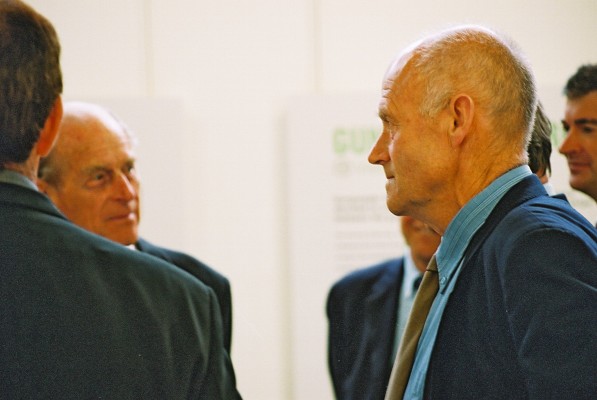
Image (Below) me proudly showing the results of what my team had achieved at the Gun Powder park
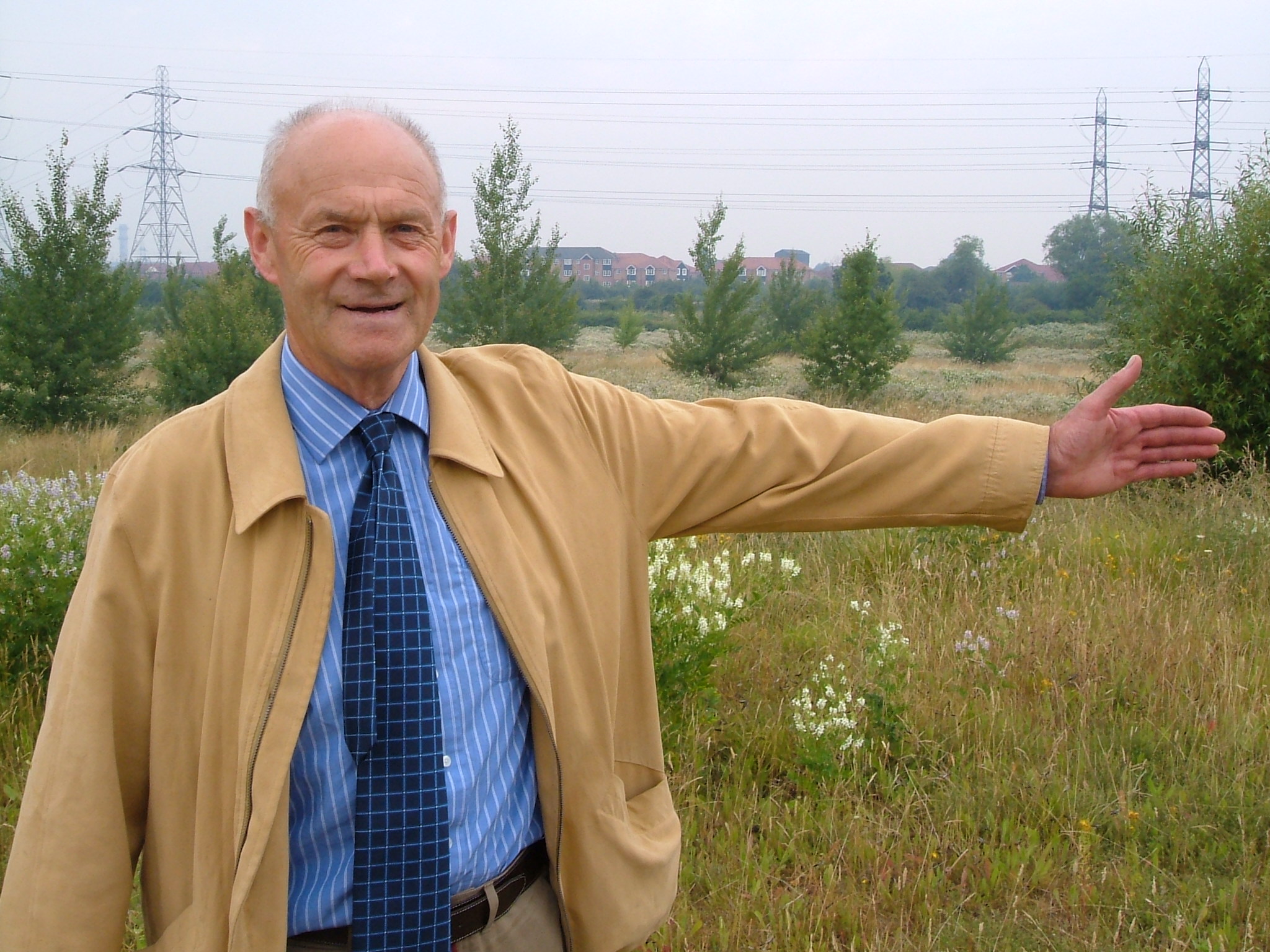
Image (Below) This young man Richard Harmer started on Saturday mornings when he was young boy of 15 years old working on our planet nursery over 20 years he got practically and academically qualified to a high level. I gather he is now one of the main directors for the company that owns Giles Landscapes who bought the company out of administration.
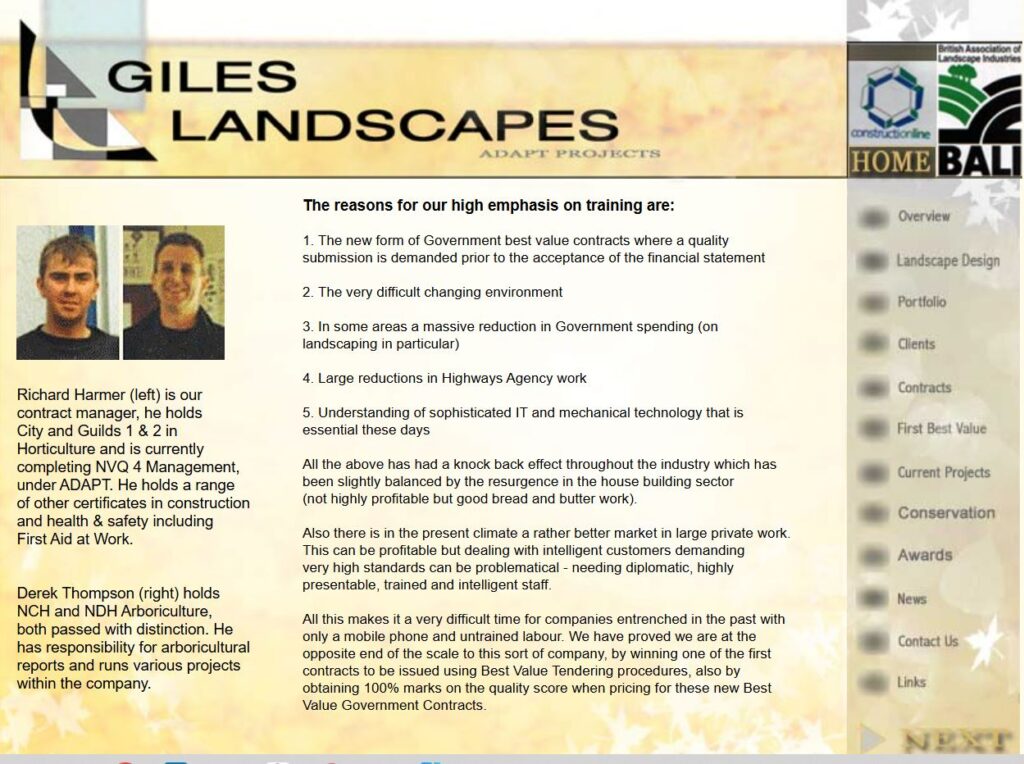
Please note that we were one of the very few companies of a high enough standard to qualify for the government value tendering system this meant the high result we had in being assessed for quality gave us and advantage for tendering we could be up to 6% in pricing than our competitors for the job under these rules. we ran contract for landscaping the A12/M11 link road changes in North London which entailed putting in parks and gardens under this contract also this high level quality result we were being assessed at was one of deciding factors to tender for the Gunpowder Park project. However we got the impression the large national landscapers became in sensed when they didn’t qualify to get this advantage it is my opinion there was some insider trading to get this QA assessment type landscaping project withdrawn.
Following our success at the 2009 RHS Chelsea Flower Show, where we were awarded Gold Medals, the Sandringham Flower Show Committee invited Steve, Jane from our design department, and me to a meeting at the Royal Estate, Sandringham. During the meeting, we were offered the opportunity to design and build the principal show garden within the Royal Marquee at the Sandringham Flower Show.
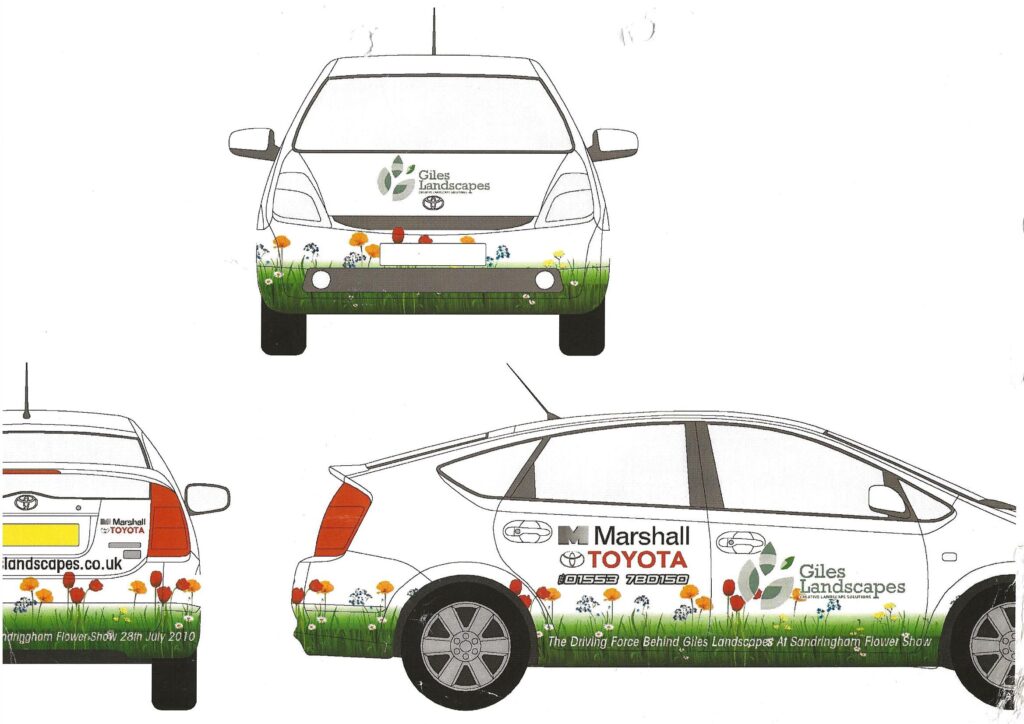
The brief was remarkably open, with only one key requirement: the garden had to reflect the tastes and interests of HRH Prince Charles. The committee had already secured sponsorship support from the Eastern Daily Press and had identified several other organisations interested in becoming involved. Among them was Marshall Toyota, who agreed to provide sponsorship if we showcased their environmentally friendly Toyota Yaris Hybrid as part of the exhibit.
In the lead-up to the show, a brand-new Toyota Yaris Hybrid arrived at our yard for our use. Jane then designed a bespoke vehicle wrap, incorporating our relatively new company logo, which we were proud to showcase at such a prestigious event.
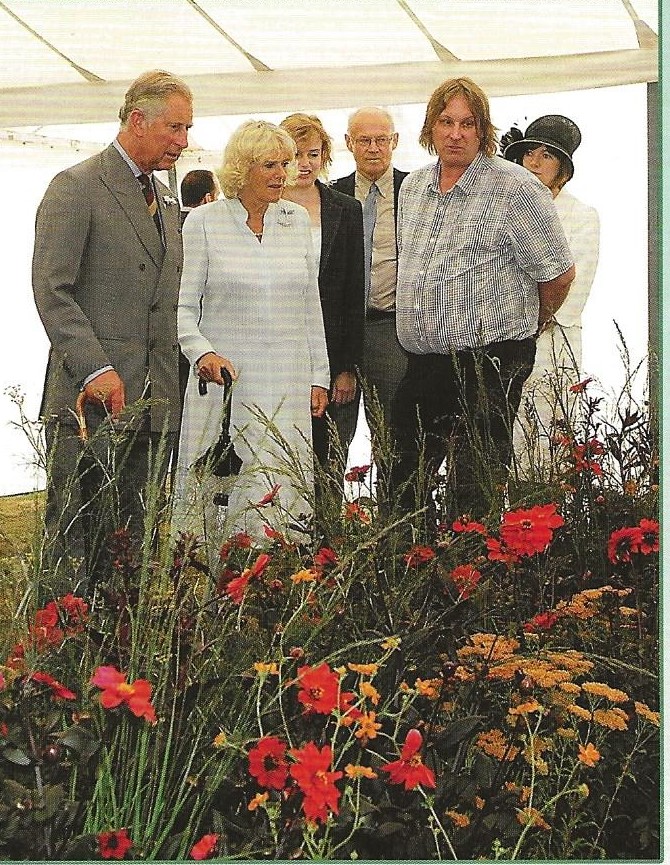
At the show itself, Jane was given the honour by the Sandringham Committee of introducing our team to HRH Prince Charles. It was a memorable occasion and a fitting recognition of the hard work and creativity that had gone into the project.
Section 4
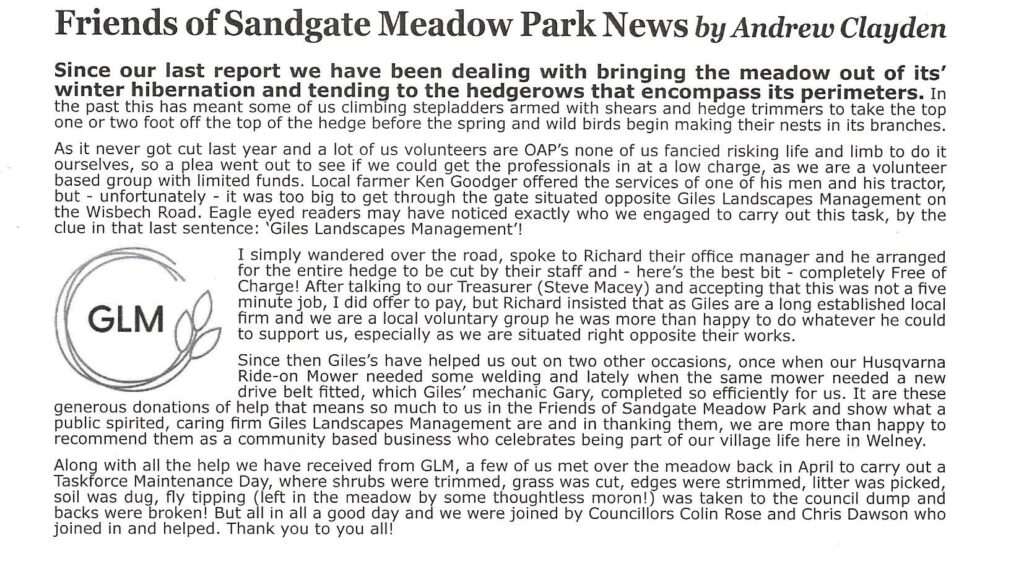
Welney’s Giles Landscaping – A Continuing Commitment to the Community
When Colin Wills of CMS St Ives acquired Giles Landscapes Ltd from administration, the business initially continued to operate from CMS’s base in St Ives. However, after a period of transition, the company relocated back to premises on the Wisbech side of Welney, bringing the business closer to its roots.
Today, the company has come full circle. Richard Kent, a Welney-born and bred local who first joined the business as a 15-year-old Saturday worker, has risen through the ranks to become a Director of Giles CMS. Under his leadership, much of the day-to-day management has returned to Welney, and the company once again has a strong local presence.
It is particularly encouraging to see the emphasis Richard places on supporting the local community. Giles CMS has developed a strong commitment to social and community initiatives, demonstrating a genuine desire to give something back to the area that helped establish and support the business in its early years during the 1960s.
As someone who has witnessed the company’s journey over many decades, I am delighted to see this continued investment in Welney and its people. It reflects the values upon which the business was originally built and ensures that its success continues to benefit the local community.